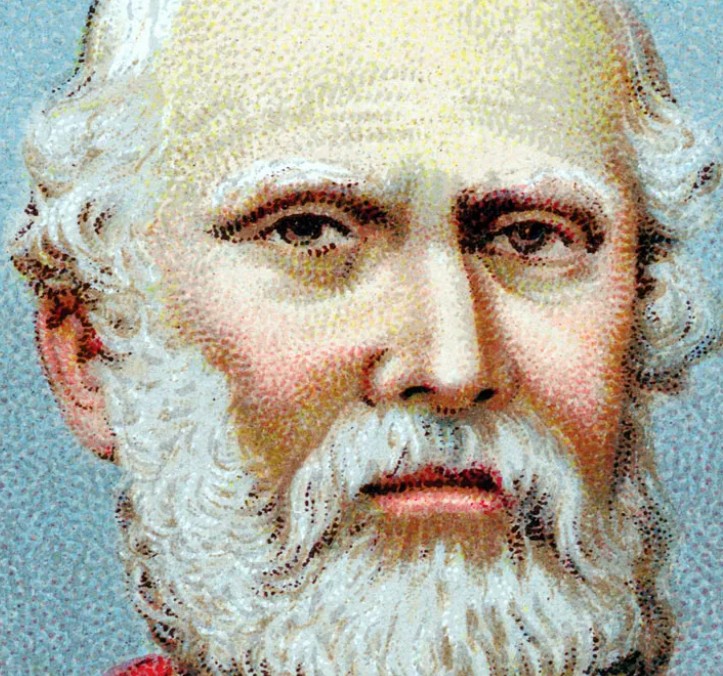
THEOGNIS OF MEGARA
THEOGNIDEA
31–38
From the good you will learn good things; but if you associate with the bad, you will lose even the understanding you have.
Associate with the good, and you will become good; mix with the bad, and you will corrupt your character.
Learn this, then, and keep company with the good, and do not abandon them for the sake of the wicked.
53–68
Our city is still a city, Cyrnus, but its people have changed.
Those who once knew neither justice nor law now govern, while the good are kept beneath them. The men who were formerly noble have become poor, and the wicked have grown rich.
They honour the bad and despise the good. They have exchanged the proper order of things, and the city has become corrupted.
These are the men I fear, Cyrnus, more than I fear the violence of the sea: they destroy the city from within, while imagining that they are making themselves prosperous.”
173–196
Poverty is a terrible thing, Cyrnus, and it is hard to bear.
It forces a man to endure many things against his will. Poverty drives him to the doors of other men; it makes him bow his head and speak words he would rather not speak.
A poor man has no freedom of speech. He must consider how he can survive, and necessity compels him to flatter those who possess wealth.
Nothing is more painful than poverty: it bends the spirit of a man and takes away his dignity. It teaches him every kind of shameful submission.
Therefore, Cyrnus, I pray that the gods will never make me poor, for there is no misery more grievous for a mortal.”
315–318
No mortal knows how the gods will bring about the end of his life.
Often a man who thinks himself secure suddenly falls into misfortune, while another who has suffered greatly is unexpectedly raised to prosperity.
For the gods easily turn human affairs this way and that. No one can know what tomorrow will bring.
Therefore do not be excessively confident in prosperity, nor despair completely when misfortune comes: the fortune of mortals is changeable.
699–718
Money is what men honour above all things.
The noble man who is poor is no longer regarded as noble; and the man who is rich, even if he comes from a lowly family, is honoured by everyone.
For wealth has the greatest power among mortals: it gives a man honour, and it gives him the means to accomplish whatever he desires.
No one asks whether the rich man is good or bad; they look only at his wealth.
Thus wealth makes even a man of humble birth appear noble, while poverty obscures the excellence of a man who possesses virtue.
////////////////////////////////////////////////////////////////////
You’re lovely to look at, boy, but on your head
There lives a crown of silliness.
You’re like a kite, you wheel round so fast
Persuaded by the words of other men.
////////////////////////////////////////////////////////////////////
Easy friends
Never engage with a poltroon or craven
Avoid him, Kurnus, as a treach'rous haven!
These friends and hearty comrades, as you think,
(Ready to join you, when you feast and drink),
These easy friends from difficulty shrink.
For a shrewd intellect, the best employ
Is to detect a soul of base alloy;
No task is harder nor imports so much;
Silver or gold, you prove it by the touch;
You separate the pure, discard the dross,
And disregard the labour and the loss:
But a friend's heart, base and adulterate
A friendly surface with a core of hate!
Of all the frauds with which the Fates have cursed
Our simple easy nature-is the worst:
Beyond the rest ruinous in effect;
And of all others hardest to detect:
For men's and women's hearts you cannot try
Beforehand, like the cattle that you buy.
Nor human wit nor reason, when you treat
For such a purpose, can escape deceit:
Fancy betrays us, and assists the cheat
An Avenger For The State
Our state is pregnant; shortly to produce
A rude avenger of prolong'd abuse.
The commons hitherto seem sober-minded,
But their superiors are corrupt and blinded.
The rule of noble spirits, brave and high,
Never endanger'd peace and harmony.
The supercilious, arrogant pretence
Of feeble minds; weakness and insolence;
Justice and truth and law wrested aside
By crafty shifts of avarice and pride;
These are our ruins, Kurnus!-never dream
(Tranquil and undisturb'd as it may seem)
Of future peace or safety to the state;
Bloodshed and strife will follow soon or late.
Never imagine that a ruin'd land
Will trust her destiny to your command,
To be remodell'd by a single hand.
Angry Words
Rash, angry words, and spoken out of season,
When passion has usurp'd the throne of reason,
Have ruin'd many. Passion is unjust,
And for an idle, transitory gust
Of gratified revenge, dooms us to pay
With long repentence at a later day.
On Inborn Traits
To rear a child is easy, but to teach
Morals and manners is beyond our reach;
To make the foolish wise, the wicked good,
That science yet was never understood.
The sons of Esculapius, if their art
Could remedy a perverse and wicked heart,
Might earn enormous wages! But in fact
The mind is not compounded and compact
Of precept and example; human art
In human nature has no share or part.
Hatred of vice, the fear of shame and sin,
Are things of native growth, not grafted in:
Else wives and worthy parents might correct
In children's hearts each error and defect:
Whereas we see them disappointed still,
No scheme nor artifice of human skill
Can rectify the passions or the will.
Fate
No costly sacrifice nor offerings given
Can change the purpose of the powers of Heaven;
Whatever Fate ordains, danger or hurt,
Or death predestined, nothing can avert.
LVIII
…..
We struggle onward, ignorant and blind,
For a result unknown and undesign’d;
Avoiding seeming ills, misunderstood
Embracing evil as a seeming good.
…..
Translation: J. BANKS
////////////////////////////////////////////////////////////////////////////////////////////
|
:ἔσσῃ ὁμῶς, ὄφρ᾽ ἂν γῆ τε καὶ ἠέλιος, αὐτὰρ ἐγὼν ὀλίγης παρὰ σεῦ οὐ τυγχάνω αἰδοῦς, :ἀλλ᾽ ὥσπερ μικρὸν παῖδα λόγοις μ᾽ ἀπατᾷς.
|
You also will be a song, while the earth and sun remain, Yet I am treated by you without even the least mark of respect And, as if I were a child, you have deceived me with words.
|
|
μηδ’ ἐ σιδε ῖ ν α ὐ γ ὰ ς ὀ ξέος ἠ ελίου· φύντα δ’ ὅ πως κε τάχιστα πύλας Ἀ ΐδαο περάσας κα ὶ κε ῖ σθαι πολλ ὴ ν γ ῆ ν ἐ παμησάμενον.
|
nor to see the rays of the keen sun; but if born, to pass the gates of Hades as quickly as possible and lie beneath a great heap of earth
|
//////////////////////////////////////////////////////////////////////////////////////////////////////////
I have given thee wings to fly with ease aloft the boundless sea and all the land. No meal or feast but thou'lt be there, couched 'twixt the lips of many a guest, and lovely youths shall sing thee clear and well in orderly wise to the clear-voiced flute. And when thou comest to go down to the lamentable house of Hades in the depths of the gloomy earth, never, albeit thou be dead, shalt thou lose thy fame, but men will think of thee as one of immortal name, Cyrnus, who rangeth the land of Greece and the isles thereof —crossing the fishy unharvestable deep not upon horseback mounted but sped of the glorious gifts of the violet-crownad Muses unto all that care to receive thee; and living as they thou shalt be a song unto posterity so long as Earth and Sun abide. Yet as for me, thou hast no respect for me, great or small, but deceivest me with words as if I were a little child.
…..
Translation: J.M. EDMONDS
A Seaman’s Sorrow
I heard the sharp cry of the bird, O son of Polypas,
Who came to men with the message to plow
In good season, and it wounded my heart black
That others own my flowering lands,
And not for me are mules dragging the curved plow,
Now, in my exile, on the wretched sea
Translation: Willis BARNSTONE