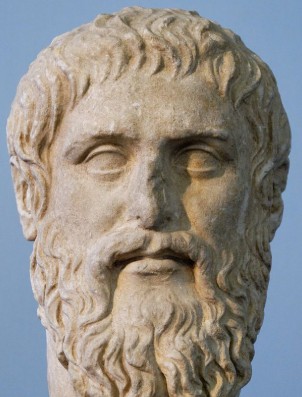
PLATO
…..
Courage is knowing what not to fear.
“The beginning is the most important part of the work.
…..
A wise man speaks because he has something to say; a fool because he has to say something.
…..
Reality is created by the mind, we can change our reality by changing our mind.
…..
If you do not take an interest in the affairs of your government, then you are doomed to live under the rule of fools.
…..
O beloved Pan and all ye other gods of this place, grant to me that I be made beautiful in my soul within, and that all external possessions be in harmony with my inner man. May I consider the wise man rich; and may I have such wealth as only the self-restrained man can bear or endure.
…..
Justice means minding your own business and not meddling with others.
…..
No one is more hated than he who speaks the truth.
Music gives a soul to the universe, wings to the mind, flight to the imagination.
…..
Apology of Socrates
…..
Someone will say: Yes, Socrates, but cannot you hold your tongue, and then you may go into a foreign city, and no one will interfere with you? Now I have great difficulty in making you understand my answer to this. For if I tell you that to do as you say would be a disobedience to the God, and therefore that I cannot hold my tongue, you will not believe that I am serious; and if I say again that daily to discourse about virtue, and of those other things about which you hear me examining myself and others, is the greatest good of man, and that the unexamined life is not worth living, you are still less likely to believe me.
…..
Do not interrupt me with shouts, Athenians, even if you think I am boasting. What I am going to say is not my own statement. I will tell you who says it and he is worthy of your respect. I will bring the god of Delphi to be the witness of my wisdom, if it is wisdom at all and of its nature. You remember Chaerephon. From youth upwards he was my comrade as well as a partisan of your democracy, sharing your recent exile. And returning with you. You remember, too, Chaerephon’s character - how impulsive he was in carrying through whatever he took in hand. Once he went to Delphi and ventured to put this question to the oracle – I entreat you again, my friends, do not interrupt me with your shouts – he asked if there was anyone who was wiser than I. The priestess answered there was no one. Chaerephon himself is dead, but his brother here will witness what I say.
Now see why I tell you this. I am going to explain to you how the prejudice against me has arisen. When I heard of the oracle, I began to reflect: what can the god mean by this riddle? I know very well I am not wise, even in the smallest degree. Then what can the oracle mean by saying I am the wisest of men? It cannot be the oracle is speaking falsely, for he is a god and cannot lie. For a long time I was at a loss to understand the meaning. Then, very reluctantly, I turned to investigate it in this manner: I went to a man who was reputed to be wise, thinking there, if anywhere, I should prove the answer wrong and meaning to point out to the oracle its mistake and to say: “You said I was the wisest of men, but this man is wiser than I am”. So I examined the man – I need not tell you his name, he was a politician – but this was the result, Athenians. When I conversed with him, I came to see, though a great many persons, most of all he himself, thought he was wise, yet he was not wise. Then, I tried to prove to him he was not wise, though he fancied he was. By so doing, I made him indignant and many of the bystanders. So, when I went away, I thought to myself, “I am wiser than this man; neither of us knows anything really worth knowing, but he thinks he has knowledge when he has not, while I, having no knowledge, do not think that I have. I seem, at any rate, to be a littler wiser than he is on this point: I do not think I know what I do not know.
…..